Stop Comparing Your Dog: What Living in Germany and the U.S. Taught Me About Dog Behavior




I often hear comments like:
"Why are European dogs so much calmer?"
"When I travelled to Germany, dogs were so much better behaved."
"My dog could never do that."
But the longer I work with dogs and their humans, the more I realize that these comparisons often miss the bigger picture.
Dogs don't exist in a vacuum. They are shaped by the culture, environment, expectations, and lifestyle around them.
And while there are certainly wonderful dogs in both countries, there are some fascinating differences in dog culture that influence behavior in ways many people don't consider. As someone who grew up in Germany, moved to the United States in my early twenties, and has spent the last 13+ years working professionally with dogs and their humans (in both countries) I have a slightly different perspective.
Let me explain... (and yes, this is a slightly nerdy subject!)
We Accept That Culture Shapes Humans
Think about it for a moment.
A person raised in the middle of nowhere on a Ranch in Canada will likely have different habits, expectations, stressors, and daily routines than someone raised in New York City, London, or Tokyo.
We don't find that surprising.
We understand that culture influences behavior.
Culture shapes what is considered normal, it shapes our expectations, and it shapes how we move through the world.
So why would dogs be any different?
Dogs live within human culture. They don't exist separately from us (and we really need to understand this concept!)
The lives they experience are directly influenced by the humans, communities, and societies around them.
So here are a few major differences I´ve noticed and personally experienced, having raised and trained dogs in Germany, and the United States:
1. Dogs Are More Integrated Into Daily Life
One of the biggest differences I noticed when moving from Germany to the U.S. was how accessible everyday life is for dogs.
In many parts of Germany, it is common to see dogs accompanying their owners to restaurants, cafés, public transportation, stores, and city centers.
Dogs spend a lot of time simply existing alongside people in everyday environments.
In the U.S., this is changing, but access is still much more limited in many areas (this depends obviously a lot on the state, and individual environment) but generally speaking dogs are often left at home while owners work, run errands, commute, or socialize.
2. America's Car Culture Changes Everything
Another major difference is transportation.
Germany is generally more walkable, with extensive public transportation and cities designed around pedestrians and bikes.
In much of the United States, daily life revolves around cars.
Many dogs spend less time moving through neighborhoods and more time jumping from one destination to another.
This matters because dogs gather information through movement, exploration, and gradual exposure.
A dog who walks through a neighborhood every day experiences the world differently than a dog whose primary experiences happen through a car window.
3. Expectations Are Different
This may be the most controversial difference.
In Germany, there is often a stronger expectation that dogs should behave appropriately in public spaces. They are expected to be "little well-behaved citizens".
People expect dogs to settle under restaurant tables, walk calmly through busy areas, and coexist politely with others.
In many parts of the U.S., expectations can be more flexible. Dogs are often given more freedom to be expressive, playful, and social (think about the amount of dog parks, doggy day cares etc.)
Neither philosophy is right or wrong.
However, expectations influence training priorities. If society expects a dog to accompany you everywhere, people are often more motivated to teach those skills early.
4. Stress Levels Matter More Than We Think
This is something I think about often.
Many American families are juggling incredibly full schedules. Long commutes, packed calendars, extracurricular activities, and constant stimulation can create significant stress for both humans and dogs.
Dogs are remarkably sensitive to the emotional environment around them.
When people are overwhelmed, dogs often feel it too.
This doesn't mean American dogs are more stressed than German dogs. There are stressed humans and dogs in both countries. But with a big focus on work-life balance and short commutes in most European countries there is a difference.
But it does highlight an important truth:
A calm dog is rarely created through obedience alone. More often, it's the result of many factors including an environment that supports regulation, recovery, and balance.
5. Barking is viewed differently
One thing that often surprises Americans visiting Germany is how little barking is tolerated in many communities.
While individual experiences vary, excessive barking can draw complaints much more quickly than it might in some American neighborhoods.
As a result, many owners prioritize teaching quiet behavior early.
Again, this doesn't mean German dogs never bark.
It simply reflects different cultural expectations around noise and shared spaces.
6. Fewer Dog Parks, More Walking
Dog parks certainly exist in Germany, but they are generally less common than in the United States.
Instead, many dog owners rely on daily walks, hiking trails, training clubs, and structured social interactions.
This doesn't mean one system is superior.
It simply creates different opportunities for exercise, enrichment, and socialization.
7. Rules and Regulations
Depending on the region, dog ownership in Germany may involve liability insurance, registration requirements, taxes, or proof of training and handling skills.
These regulations vary widely, but they often communicate a clear message:
Owning a dog is viewed as a significant responsibility.
In the U.S., regulations tend to vary dramatically from state to state and municipality to municipality.
The Problem With Comparison
So now that you made it through this extensive list, I just want you to leave with this one thing:
Stop comparing your dog to a dog you see in a different country & culture.
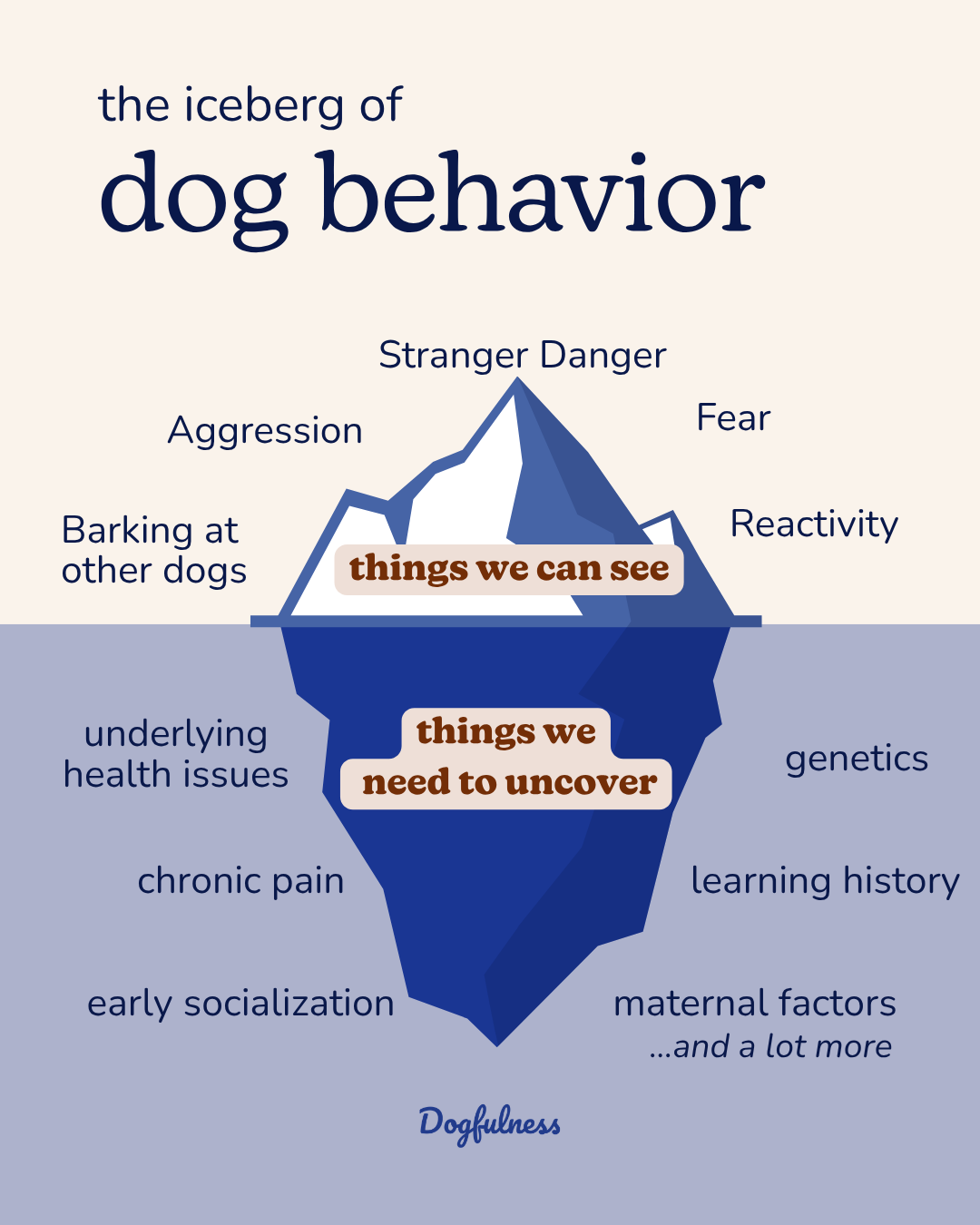
That calm dog lying under a café table in Munich isn't just the product of training.
That dog is also a product of thousands of tiny experiences, cultural expectations, environmental influences, and lifestyle factors that may be very different from your own.
The same is true for your dog.
Instead of asking:
"Why isn't my dog like that?"
Try asking:
"What does my dog need to succeed in the environment we actually live in?"
Because ultimately, dog training isn't about creating the same dog.
I work with clients from all over the world and put a big emphasis on truly understanding the individual environment and lifestyle of dog and human (and that looks very different from somebody living in the Australian outback and somebody living in New York City!)
"Bianca truly gets to the root of the problem."
"Hands down, Bianca is the best and most experienced dog trainer on so many levels--she's more than a trainer--she truly gets to the root of the problem. We've worked with several trainers over the years, and we've never had one with such an incredible disposition and strong animal behavior acumen. Her feedback, tips and overall approach made everything feel achievable. The analogies Bianca uses truly help things click—we finally understood the why behind the training. We've always felt overwhelmed by dog training in the past, but this was easy to grasp, practical, and made complete sense. She's made our home of four dogs much more pleasant and calm!"
"Bianca truly gets to the root of the problem."
"Hands down, Bianca is the best and most experienced dog trainer on so many levels--she's more than a trainer--she truly gets to the root of the problem. We've worked with several trainers over the years, and we've never had one with such an incredible disposition and strong animal behavior acumen. Her feedback, tips and overall approach made everything feel achievable. The analogies Bianca uses truly help things click—we finally understood the why behind the training. We've always felt overwhelmed by dog training in the past, but this was easy to grasp, practical, and made complete sense. She's made our home of four dogs much more pleasant and calm!"
"Bianca truly gets to the root of the problem."
"Hands down, Bianca is the best and most experienced dog trainer on so many levels--she's more than a trainer--she truly gets to the root of the problem. We've worked with several trainers over the years, and we've never had one with such an incredible disposition and strong animal behavior acumen. Her feedback, tips and overall approach made everything feel achievable. The analogies Bianca uses truly help things click—we finally understood the why behind the training. We've always felt overwhelmed by dog training in the past, but this was easy to grasp, practical, and made complete sense. She's made our home of four dogs much more pleasant and calm!"
Keep learning what helps your dog thrive




Questions?
I'm here.
Feel free to send a message.