Why Understanding the Root Cause of Dog Behavior Is Essential for Lasting Change
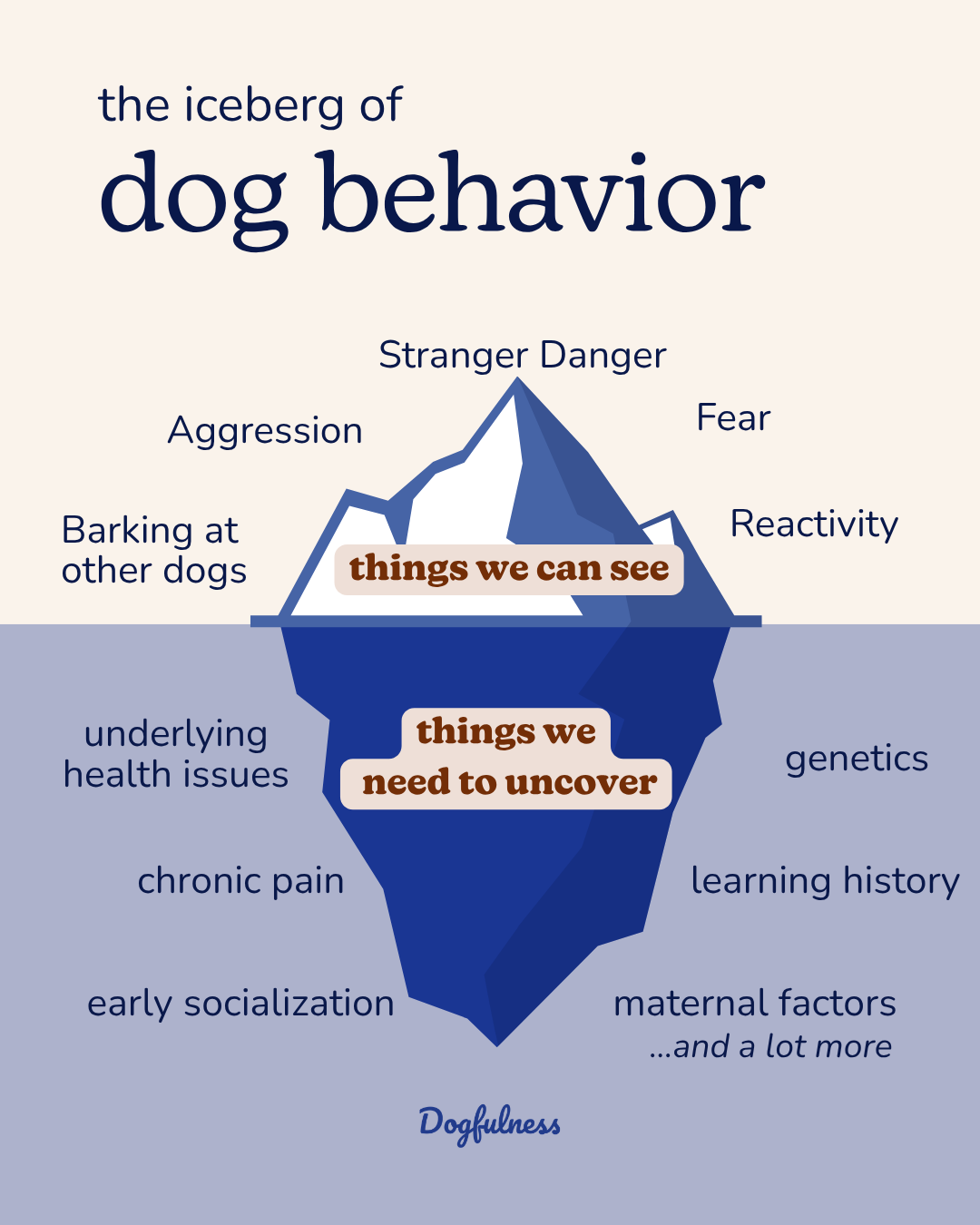



When we’re dealing with behavior challenges in dogs, it can be really tempting to focus only on what we see in the moment.
The barking. The pulling. The reactivity. The jumping.
And of course, we want it to stop. It´s annoying. It´s embarrassing!
But if we only address the behavior itself without understanding why it’s happening, we often end up stuck in a cycle of short-term fixes that don’t really last.
Long-term change almost always starts with curiosity. Ever since I started working with dogs as a teenager I was fascinated in deep diving into a dog´s history and lifestyle to uncover what´s underneath the barking, the anxiety, or the fear.
A simple analogy
Imagine going to a doctor with chronic headaches.
You’re uncomfortable, you just want relief, and the doctor gives you painkillers. They might help in the moment. You feel better. You can function again.
But nobody is asking why you have the headaches in the first place.
Is it stress? Sleep? Nutrition? Vision? Something else entirely? Something more serious?
The symptom is being managed, but the root cause is still there.
And just to be clear — I’m not comparing complex medical issues to dog training. This is just a simple way to illustrate why looking deeper matters so much when we work with behavior.
Behavior is communication, not the problem itself
In dogs, behavior is rarely the actual problem. It’s information.
It tells us something about the dog’s internal state, their environment, and their history. A role of a dog behavior consultant is to effectively gather data to better understand what´s going on so we can support the dog and human team as a whole.
And that means if we only try to suppress or interrupt the behavior without understanding where it comes from, we’re often missing the bigger picture.
This is where holistic behavior consulting is different
Traditional training often focuses on the behavior itself:
“Do this instead of that.”
“Stop doing X.”
“Replace Y with Z.”
"Use X tool to stop the behavior from happening"
And while training absolutely has its place, true long-term change usually requires looking at all the layers that influence behavior, not just the visible ones.
In holistic dog behavior consulting, we zoom out.
We look at things like:
- Genetics
- Early socialization
- Maternal factors
- Lifestyle and daily routine
- Exercise and enrichment
- Environmental stressors
- Nutrition
- Chronic pain or discomfort
…and more.
Dog behavior doesn’t happen in a vacuum.
It’s shaped by a whole system of factors that all interact with each other.
Why this matters
When we understand the root cause, we stop guessing.
We stop applying random fixes and hoping something sticks.
Instead, we can actually target the real drivers behind the behavior which makes change not only more effective, but also more sustainable.
It also changes the relationship we have with our dogs: Instead of seeing behavior as “bad” or “wrong,” we start seeing it as information we can work with.
That shift alone can make a big difference.
Final thought
Quick fixes can be helpful in the short term. Sometimes we need them just to get through the day.
But if we want lasting change, we have to stay curious.
The more we understand the story behind the behavior, the better we can actually help and support our dogs!
"Bianca truly gets to the root of the problem."
"Hands down, Bianca is the best and most experienced dog trainer on so many levels--she's more than a trainer--she truly gets to the root of the problem. We've worked with several trainers over the years, and we've never had one with such an incredible disposition and strong animal behavior acumen. Her feedback, tips and overall approach made everything feel achievable. The analogies Bianca uses truly help things click—we finally understood the why behind the training. We've always felt overwhelmed by dog training in the past, but this was easy to grasp, practical, and made complete sense. She's made our home of four dogs much more pleasant and calm!"
"Bianca truly gets to the root of the problem."
"Hands down, Bianca is the best and most experienced dog trainer on so many levels--she's more than a trainer--she truly gets to the root of the problem. We've worked with several trainers over the years, and we've never had one with such an incredible disposition and strong animal behavior acumen. Her feedback, tips and overall approach made everything feel achievable. The analogies Bianca uses truly help things click—we finally understood the why behind the training. We've always felt overwhelmed by dog training in the past, but this was easy to grasp, practical, and made complete sense. She's made our home of four dogs much more pleasant and calm!"
"Bianca truly gets to the root of the problem."
"Hands down, Bianca is the best and most experienced dog trainer on so many levels--she's more than a trainer--she truly gets to the root of the problem. We've worked with several trainers over the years, and we've never had one with such an incredible disposition and strong animal behavior acumen. Her feedback, tips and overall approach made everything feel achievable. The analogies Bianca uses truly help things click—we finally understood the why behind the training. We've always felt overwhelmed by dog training in the past, but this was easy to grasp, practical, and made complete sense. She's made our home of four dogs much more pleasant and calm!"
Keep learning what helps your dog thrive






Questions?
I'm here.
Feel free to send a message.